
Beyond Binance: Top Crypto Exchanges & Practical Trading Operations Guide
As the cryptocurrency market continues to mature, many traders are looking beyond Binance to diversify their platforms. While Binance remains a dominant force, alternative exchanges like Coinbase, Kraken, Bybit, and OKX offer distinct features, regional access, and different asset listings. Understanding how to operate these platforms correctly is essential for security and efficiency. This guide explains what other exchanges are available and provides a clear step-by-step operational walkthrough.
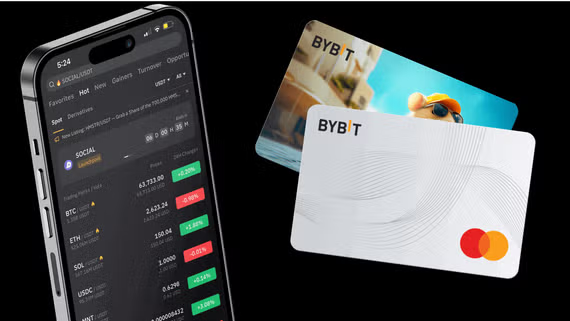
First, let’s explore the most notable alternatives. Coinbase is widely regarded as the most user-friendly option for beginners in the United States and Europe, offering a simple interface and insured custodial wallets. Kraken is known for its strong security measures and advanced trading features, including margin trading and staking. For derivatives and futures trading, Bybit and OKX are major competitors, providing high leverage and deep liquidity. Additionally, decentralized exchanges (DEXs) like Uniswap and PancakeSwap allow peer-to-peer trading without a central authority, though they require a self-custodial wallet like MetaMask.
Now, let’s focus on how to operate these exchanges safely. The first step is account creation and verification. For centralized platforms such as Coinbase or Kraken, you must provide your email, create a strong password, and complete Know Your Customer (KYC) verification by uploading a government-issued ID. This process typically takes a few minutes to 24 hours. For DEXs like Uniswap, no registration is needed; simply connect your wallet to the website and approve the network.
The second critical operation is depositing funds. On centralized exchanges, navigate to the "Deposit" section, select your preferred cryptocurrency (e.g., USDT or BTC), and copy the deposit address. Always double-check the network type—using the wrong network (e.g., sending ERC-20 to a BEP-20 address) can result in permanent loss of funds. For DEXs, you need to transfer crypto from a wallet or use a fiat on-ramp service like MoonPay integrated into the platform.
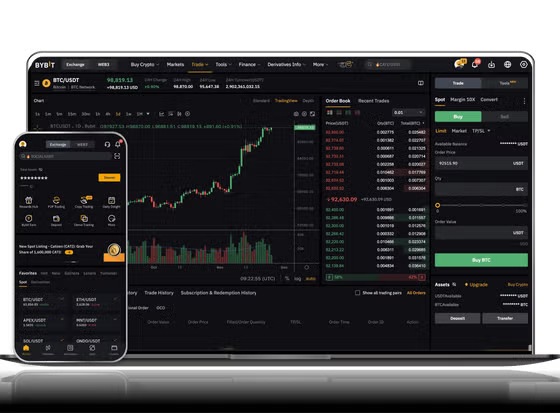
Third, executing trades varies by exchange type. On Coinbase, you can use the "Buy/Sell" button for market or limit orders. On Bybit or OKX, you will find a more complex trading interface with order books and leverage sliders. For spot trading, select a trading pair (e.g., BTC/USDT), choose between a market order (instant execution at current price) or a limit order (set a specific price), and confirm the trade. Always review transaction fees, which range from 0.1% to 0.6% depending on the platform and your volume.
Security is paramount when operating any exchange. Enable two-factor authentication (2FA) using an app like Google Authenticator—never use SMS 2FA if possible. Withdraw any large balances to a hardware wallet like Ledger or Trezor. For DEXs, never share your private keys or seed phrases, and avoid signing random transaction approvals from unknown sites. Finally, monitor your account history regularly to detect any unauthorized activity.
In conclusion, while Binance is a comprehensive platform, exchanges like Coinbase, Kraken, Bybit, and Uniswap serve different needs. Mastering the operations of depositing, trading, and withdrawing on these alternatives requires attention to network compatibility, fee structures, and security protocols. By following the steps outlined above, you can confidently operate multiple exchanges and optimize your cryptocurrency trading strategy.


发表评论